 RigLoot
Best Gaming PC Under $1000 (2026)
Three ways to spend a grand well in 2026 - a balanced all-rounder, a value build, and a 1440p-ready config - whether you buy prebuilt or build it yourself.
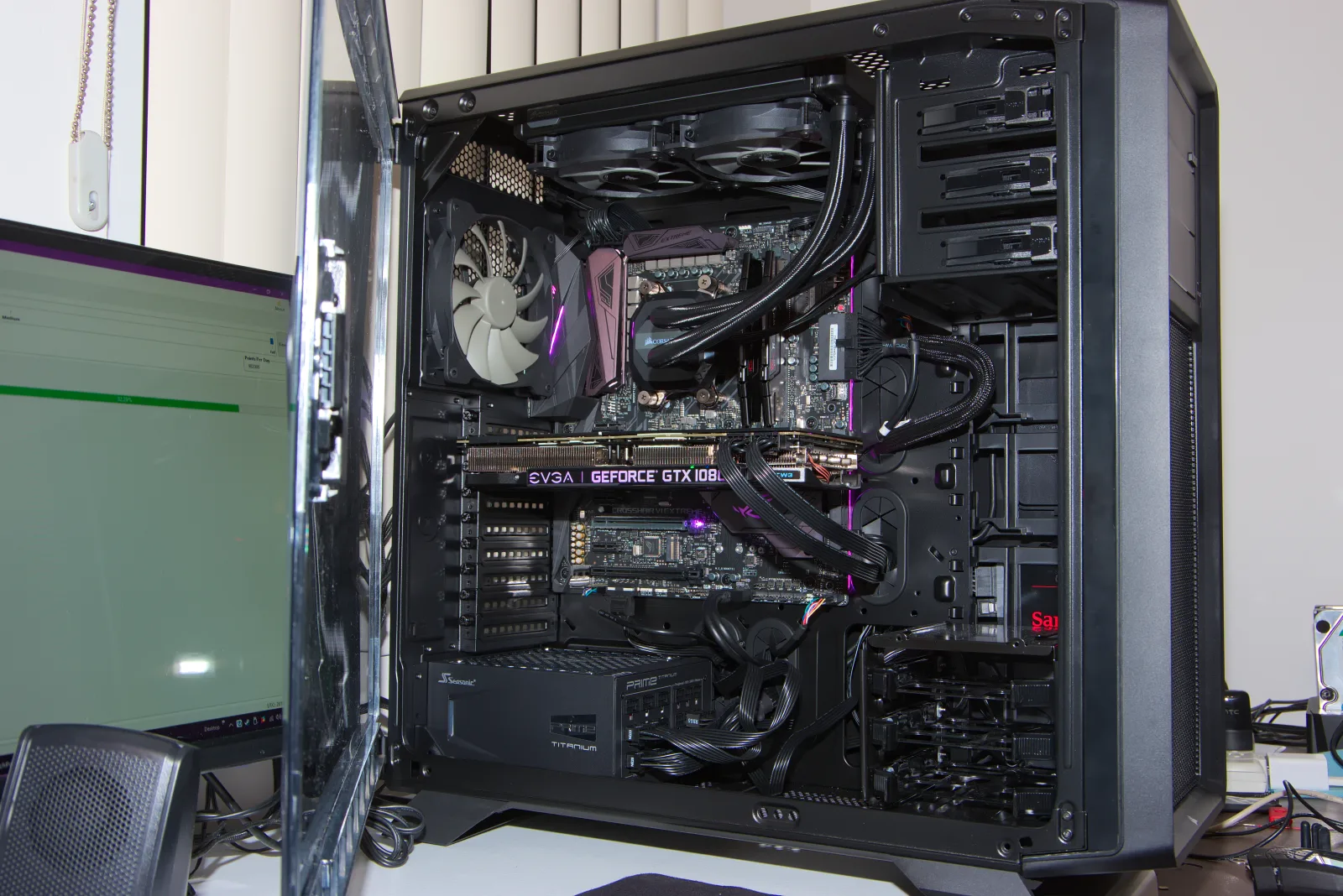
Image: · bwDraco · CC BY-SA 2.0
A thousand dollars remains the classic gaming-PC budget - enough for a machine that crushes 1080p and reaches into 1440p, but tight enough that every component choice matters. This guide is for first-time buyers and upgraders who want a system that plays modern titles at high settings and high frame rates without overspending. Whether you buy a prebuilt for convenience and warranty or assemble it yourself to squeeze out more performance, here is how to get the most from $1,000 in 2026.
How to choose
At this budget, the graphics card and CPU eat most of the money, so prioritize wisely:
- GPU first. It has the biggest impact on gaming. Aim for a current-gen card with 16GB of VRAM if you can, such as an RTX 5060 / 5060 Ti or Radeon RX 9060 XT.
- A modern 6-core CPU is plenty. A Ryzen 5 7600 or Intel Core equivalent won't bottleneck these GPUs and leaves an easy upgrade path.
- Do not cut RAM or storage to the bone. 16GB DDR5 is the floor, 32GB is ideal in 2026, and a 1TB NVMe SSD is the practical minimum given modern install sizes.
- Prebuilt vs. DIY. Building yourself typically buys you a GPU tier more performance for the same money; a prebuilt gives you a single warranty and zero assembly. Neither is wrong - choose based on your comfort level.
Prices shift week to week, so confirm current pricing and look for bundle or sale timing before you commit.
The recommendations
Best overall (around $1,000) - the balanced all-rounder. Target a Ryzen 5 7600, a 16GB Radeon RX 9060 XT or RTX 5060 Ti, 32GB of DDR5, and a 1TB Gen4 NVMe SSD in a case with decent airflow and a quality 650W PSU. This configuration runs virtually anything at high settings 1080p well past 100fps and handles 1440p high with upscaling. It is the best-rounded way to spend the full budget and the one most buyers should default to.
Best value (around $750-$800) - maximum frames per dollar. If you want to spend less and still game seriously, drop to a Ryzen 5 7500F or 5600, an RTX 5060 or Intel Arc B580, 16GB (ideally 32GB) DDR5, and a 1TB SSD. You give up some ray-tracing muscle and a little future headroom, but you get a genuinely strong 1080p high-refresh machine and pocket the savings for a monitor or peripherals. The Arc B580's 12GB of VRAM makes it a standout budget option.
Best for 1440p (stretch the full $1,000) - resolution-focused. Prioritize the GPU: a 16GB Radeon RX 9060 XT or RTX 5060 Ti paired with a Ryzen 5 7600 and 32GB DDR5. Trim elsewhere - a slightly smaller SSD or a value case - to keep the graphics card as strong as possible. This build is aimed squarely at gamers pairing the PC with a 1440p monitor who want high settings and smooth frame rates at that sharper resolution.
Tips and pitfalls
- Beware bargain prebuilts with a mystery PSU or 8GB GPU. Cut corners hide in the power supply, the RAM speed, and the VRAM. Read the full spec sheet, not just the CPU and GPU names.
- 16GB VRAM beats a flashy CPU at this budget. Do not let a seller upsell you a pricier processor while leaving you with an 8GB graphics card.
- Confirm DDR5 and a modern socket. Older DDR4 platforms can be cheaper up front but limit your upgrade path. A current AM5 or equivalent board is worth it.
- Check upgradeability. A spare M.2 slot, room for more RAM, and a PSU with headroom (650W+) let you add a bigger GPU later without replacing the whole system.
- Time your purchase. Component and prebuilt prices dip around major sales. If you can wait a few weeks for a deal, your grand goes further.
Bottom line: the balanced all-rounder is the safe default, the value build wins on frames per dollar, and the 1440p config is for anyone chasing that sharper resolution. All three prove that in 2026, a well-chosen $1,000 gaming PC still delivers a fantastic experience.